It has been an extraordinary week for New South Wales science, innovation, and STEM education. Across both the national stage at Parliament House and locally at Government House Sydney, researchers, innovators, and educators from NSW proved once again why the state is a powerhouse of discovery.
At the 2026 Prime Minister’s Prizes for Science and the 2026 NSW Premier’s Prizes for Science & Engineering, our homegrown talent took centre stage; from pioneering melanoma treatments and turning waste emissions into clean energy to inspiring primary schoolers to think like real scientists. Here is a complete look at all the 2026 winners across both prestigious awards, shining a spotlight on the remarkable achievements coming out of New South Wales.
2026 Prime Minister’s Prizes for Science
The 2026 Prime Minister’s Prizes for Science recognise Australia’s top scientists, innovators and educators. From breakthroughs in precision oncology and the treatment of melanoma to a scientific understanding of Aboriginal and Torres Strait Islander knowledge systems, this year’s recipients showcase the diversity of talent driving Australia’s scientific capability and inspiring the next generation of Australian science leaders.
The winners were announced Parliament House on Tuesday 24 November 2026.
Left to right: Dr Joseph J Richardson, Dr Gabrielle Oslington, Simon Draper PSM (our Secretary), Senator the Hon Tim Ayres, Professor Anthony Thomas AC, Professor Georgina Long AO, Hon Anthony Albanese MP, Professor Tony Haymet PhD FTSE (Australia’s Chief Scientist), Professor Christopher Matthews, Professor Asha Bowen OAM, Professor Mark Smythe, Mrs Nicolette Wheaton, Associate Professor Fengwang Li.
New South Wales
University of Sydney
Prime Minister’s Prize for Science: Professor Georgina Long, a world-renowned oncologist whose breakthrough research has pushed the frontiers of precision oncology, leading to the first highly effective drug therapies for melanoma and the transformation of cancer treatment worldwide.
Malcolm McIntosh Prize for Physical Scientist of the Year: Associate Professor Fengwang Li, who has been recognised for his pioneering new approaches to carbon capture, green hydrogen production, and sustainable chemical manufacturing.
University of Technology Sydney
Prime Minister’s Prize for Aboriginal and Torres Strait Islander Knowledge Systems: Professor Christopher Matthews, a proud Quandamooka man who has advanced scientific understanding of how Aboriginal and Torres Strait Islander knowledge systems function as rigorous mathematical systems. He uses his expertise to translate between Indigenous knowledge systems and Western mathematics at a national and global scale.
Arden Anglican School Beecroft
Prime Minister’s Prize for Excellence in Science Teaching in Primary Schools: Dr Gabrielle Oslington, whose leadership of large-scale STEM programs and commitment to advancing scientific and mathematical learning has made a significant impact across primary education.
Queensland
Prime Minister’s Prize for Innovation: Professor Mark Smythe, who has delivered substantial benefits for Australia by translating scientific discovery into globally successful medicines. He has translated research into high-value medicines that benefit patients worldwide, delivering significant public and economic benefits through the companies he established, while strengthening Australia’s biotechnology ecosystem and global reputation.
Prime Minister’s Prize for Excellence in Science Teaching in Secondary Schools: Ms Nicolette Wheaton, whose excellence in STEM teaching through innovative, inclusive and high-impact educational practices inspires students to become confident and capable learners in STEM.
Victoria
Prime Minister’s Prize for Science: Professor Anthony Thomas, one of the world’s most esteemed physicists whose pioneering research has transformed our understanding of protons, neutron stars and dark matter, advancing knowledge of some of the most fundamental questions about matter and the universe.
Prize for New Innovators: Dr Joseph Richardson, who has developed nanocoating technologies used across key industries including cropping, textiles, healthcare and defence products.
Western Australia
Frank Fenner Prize for Life Scientist of the Year: Professor Asha Bowen, whose work has helped deliver the first significant reduction in childhood skin infections among Aboriginal children in more than half a century.
2026 NSW Premier’s Prizes for Science & Engineering
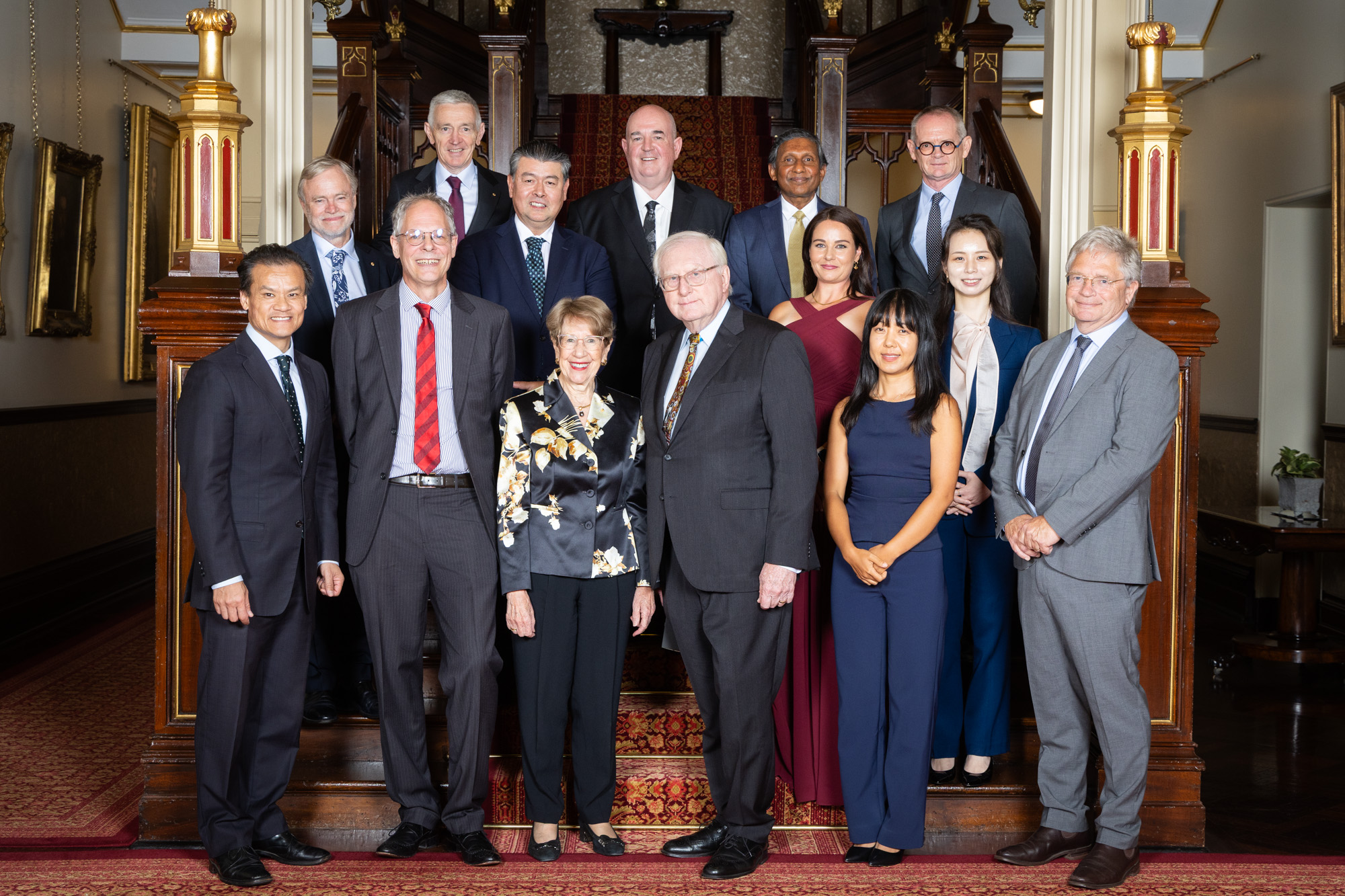
The 2026 NSW Premier’s Prizes for Science & Engineering were announced on 25 November 2026 at Government House Sydney, with Distinguished Professor Ian Paulsen of Macquarie University named the 2026 NSW Scientist of the Year for his pioneering work in synthetic biology and microbial genomics.
Excellence in Mathematics, Earth Sciences, Chemistry or Physics: Scientia Professor Justin Gooding from the School of Chemistry, UNSW Sydney. He is a highly distinguished leader in electrochemistry, nanotechnology and biosensor development.
Excellence in Biological Sciences: Scientia Professor Richard Kingsford AO School of Biological, Earth and Environmental Sciences, UNSW Sydney, Director of the Centre for Ecosystem Science. Professor Richard Kingsford is an internationally recognised river ecologist and conservation biologist focusing on wetlands, rivers and waterbird ecology.
Excellence in Medical Biological Sciences: Professor Chris Maher AM Sydney Medical School, the University of Sydney, Director of the Institute for Musculoskeletal Health. Professor Chris Maher is an expert in musculoskeletal health and pain research, whose work has delivered significant clinical impact and had broad international influence.
Excellence in Engineering or Information and Communications Technology: Scientia Professor Brian Uy School of Civil and Environmental Engineering, UNSW Sydney. Scientia Professor Brian Uy is a global leader in structural engineering whose work has shaped engineering practice, standards and infrastructure design in Australia and internationally.
NSW Early Career Researcher of the Year (Biological Sciences): Dr Natalie Matosin Senior Research Fellow, School of Medical Sciences, the University of Sydney, Director of the MINDS Lab. Dr Natalie Matosin is an award‑winning neurobiologist making significant contributions to our understanding of the molecular and cellular biology of the human brain.
NSW Early Career Researcher of the Year (Physical Sciences): Dr Ann-Na Cho Senior Lecturer, School of Biomedical Engineering, the University of Sydney, Group Leader of the human Brain Microphysiological System (hBMS) Laboratory. Dr Ann-Na Cho is a stem cell engineer, biomanufacturer and neuroscientist whose work has produced exceptional contributions across neurobiology, particularly through the development of advanced human brain models.
NSW Early Career Researcher of the Year (Physical Sciences): Associate Professor Mengyu Li Senior Lecturer, School of Physics, the University of Sydney. Associate Professor Mengyu Li is a sustainability scientist. She uses advanced modelling to reveal how energy, food, climate and economic systems interact, and how production and consumption create environmental pressures across global supply chains.
Leadership in Innovation in NSW: Distinguished Professor Buddhima Indraratna AM School of Civil and Environmental Engineering, University of Technology Sydney, Director of the Transport Research Centre. Distinguished Professor Buddhima Indraratna is a civil (geotechnical) academic at UTS whose world-class research has tackled pressing challenges in transport infrastructure, culminating in scientific innovations.
Innovation in Science, Technology, Engineering or Mathematics Teaching in NSW: Matthew Macdonell Ulladulla High School. Matthew Macdonell is a Technology and Applied Studies (TAS) teacher at Ulladulla High School, who has facilitated strong student engagement in STEM through robotics and competition‑based learning, with significant impact beyond his own school.
From saving lives through precision melanoma immunotherapies and decoding the cellular impacts of trauma on the brain, to turning industrial carbon emissions into clean energy and sparking curiosity in primary school classrooms, New South Wales’ 2026 awardees show just how deeply local research and STEM education shape our daily lives.
Attending the awards is always so inspiringand we are deeply proud to champion and promote the extraordinary work of these researchers, engineers and educators across the state and beyond.


It has been an extraordinary week for New South Wales science, innovation, and STEM education. Across both the national stage at Parliament House and locally at Government House Sydney, researchers, innovators, and educators from NSW proved once again why the state is a powerhouse of discovery.
At the 2026 Prime Minister’s Prizes for Science and the 2026 NSW Premier’s Prizes for Science & Engineering, our homegrown talent took centre stage; from pioneering melanoma treatments and turning waste emissions into clean energy to inspiring primary schoolers to think like real scientists. Here is a complete look at all the 2026 winners across both prestigious awards, shining a spotlight on the remarkable achievements coming out of New South Wales.
2026 Prime Minister’s Prizes for Science
The 2026 Prime Minister’s Prizes for Science recognise Australia’s top scientists, innovators and educators. From breakthroughs in precision oncology and the treatment of melanoma to a scientific understanding of Aboriginal and Torres Strait Islander knowledge systems, this year’s recipients showcase the diversity of talent driving Australia’s scientific capability and inspiring the next generation of Australian science leaders.
The winners were announced Parliament House on Tuesday 24 November 2026.
Left to right: Dr Joseph J Richardson, Dr Gabrielle Oslington, Simon Draper PSM (our Secretary), Senator the Hon Tim Ayres, Professor Anthony Thomas AC, Professor Georgina Long AO, Hon Anthony Albanese MP, Professor Tony Haymet PhD FTSE (Australia’s Chief Scientist), Professor Christopher Matthews, Professor Asha Bowen OAM, Professor Mark Smythe, Mrs Nicolette Wheaton, Associate Professor Fengwang Li.
New South Wales
University of Sydney
Prime Minister’s Prize for Science: Professor Georgina Long, a world-renowned oncologist whose breakthrough research has pushed the frontiers of precision oncology, leading to the first highly effective drug therapies for melanoma and the transformation of cancer treatment worldwide.
Malcolm McIntosh Prize for Physical Scientist of the Year: Associate Professor Fengwang Li, who has been recognised for his pioneering new approaches to carbon capture, green hydrogen production, and sustainable chemical manufacturing.
University of Technology Sydney
Prime Minister’s Prize for Aboriginal and Torres Strait Islander Knowledge Systems: Professor Christopher Matthews, a proud Quandamooka man who has advanced scientific understanding of how Aboriginal and Torres Strait Islander knowledge systems function as rigorous mathematical systems. He uses his expertise to translate between Indigenous knowledge systems and Western mathematics at a national and global scale.
Arden Anglican School Beecroft
Prime Minister’s Prize for Excellence in Science Teaching in Primary Schools: Dr Gabrielle Oslington, whose leadership of large-scale STEM programs and commitment to advancing scientific and mathematical learning has made a significant impact across primary education.
Queensland
Prime Minister’s Prize for Innovation: Professor Mark Smythe, who has delivered substantial benefits for Australia by translating scientific discovery into globally successful medicines. He has translated research into high-value medicines that benefit patients worldwide, delivering significant public and economic benefits through the companies he established, while strengthening Australia’s biotechnology ecosystem and global reputation.
Prime Minister’s Prize for Excellence in Science Teaching in Secondary Schools: Ms Nicolette Wheaton, whose excellence in STEM teaching through innovative, inclusive and high-impact educational practices inspires students to become confident and capable learners in STEM.
Victoria
Prime Minister’s Prize for Science: Professor Anthony Thomas, one of the world’s most esteemed physicists whose pioneering research has transformed our understanding of protons, neutron stars and dark matter, advancing knowledge of some of the most fundamental questions about matter and the universe.
Prize for New Innovators: Dr Joseph Richardson, who has developed nanocoating technologies used across key industries including cropping, textiles, healthcare and defence products.
Western Australia
Frank Fenner Prize for Life Scientist of the Year: Professor Asha Bowen, whose work has helped deliver the first significant reduction in childhood skin infections among Aboriginal children in more than half a century.
2026 NSW Premier’s Prizes for Science & Engineering
The 2026 NSW Premier’s Prizes for Science & Engineering were announced on 25 November 2026 at Government House Sydney, with Distinguished Professor Ian Paulsen of Macquarie University named the 2026 NSW Scientist of the Year for his pioneering work in synthetic biology and microbial genomics.
Excellence in Mathematics, Earth Sciences, Chemistry or Physics: Scientia Professor Justin Gooding from the School of Chemistry, UNSW Sydney. He is a highly distinguished leader in electrochemistry, nanotechnology and biosensor development.
Excellence in Biological Sciences: Scientia Professor Richard Kingsford AO School of Biological, Earth and Environmental Sciences, UNSW Sydney, Director of the Centre for Ecosystem Science. Professor Richard Kingsford is an internationally recognised river ecologist and conservation biologist focusing on wetlands, rivers and waterbird ecology.
Excellence in Medical Biological Sciences: Professor Chris Maher AM Sydney Medical School, the University of Sydney, Director of the Institute for Musculoskeletal Health. Professor Chris Maher is an expert in musculoskeletal health and pain research, whose work has delivered significant clinical impact and had broad international influence.
Excellence in Engineering or Information and Communications Technology: Scientia Professor Brian Uy School of Civil and Environmental Engineering, UNSW Sydney. Scientia Professor Brian Uy is a global leader in structural engineering whose work has shaped engineering practice, standards and infrastructure design in Australia and internationally.
NSW Early Career Researcher of the Year (Biological Sciences): Dr Natalie Matosin Senior Research Fellow, School of Medical Sciences, the University of Sydney, Director of the MINDS Lab. Dr Natalie Matosin is an award‑winning neurobiologist making significant contributions to our understanding of the molecular and cellular biology of the human brain.
NSW Early Career Researcher of the Year (Physical Sciences): Dr Ann-Na Cho Senior Lecturer, School of Biomedical Engineering, the University of Sydney, Group Leader of the human Brain Microphysiological System (hBMS) Laboratory. Dr Ann-Na Cho is a stem cell engineer, biomanufacturer and neuroscientist whose work has produced exceptional contributions across neurobiology, particularly through the development of advanced human brain models.
NSW Early Career Researcher of the Year (Physical Sciences): Associate Professor Mengyu Li Senior Lecturer, School of Physics, the University of Sydney. Associate Professor Mengyu Li is a sustainability scientist. She uses advanced modelling to reveal how energy, food, climate and economic systems interact, and how production and consumption create environmental pressures across global supply chains.
Leadership in Innovation in NSW: Distinguished Professor Buddhima Indraratna AM School of Civil and Environmental Engineering, University of Technology Sydney, Director of the Transport Research Centre. Distinguished Professor Buddhima Indraratna is a civil (geotechnical) academic at UTS whose world-class research has tackled pressing challenges in transport infrastructure, culminating in scientific innovations.
Innovation in Science, Technology, Engineering or Mathematics Teaching in NSW: Matthew Macdonell Ulladulla High School. Matthew Macdonell is a Technology and Applied Studies (TAS) teacher at Ulladulla High School, who has facilitated strong student engagement in STEM through robotics and competition‑based learning, with significant impact beyond his own school.
From saving lives through precision melanoma immunotherapies and decoding the cellular impacts of trauma on the brain, to turning industrial carbon emissions into clean energy and sparking curiosity in primary school classrooms, New South Wales’ 2026 awardees show just how deeply local research and STEM education shape our daily lives.
Attending the awards is always so inspiring and we are deeply proud to champion and promote the extraordinary work of these researchers, engineers and educators across the state and beyond.
Share this: